
Blog
Discover the latest Microsoft Dynamics, Business Central, SharePoint and Power Platform news and developments in our blog.
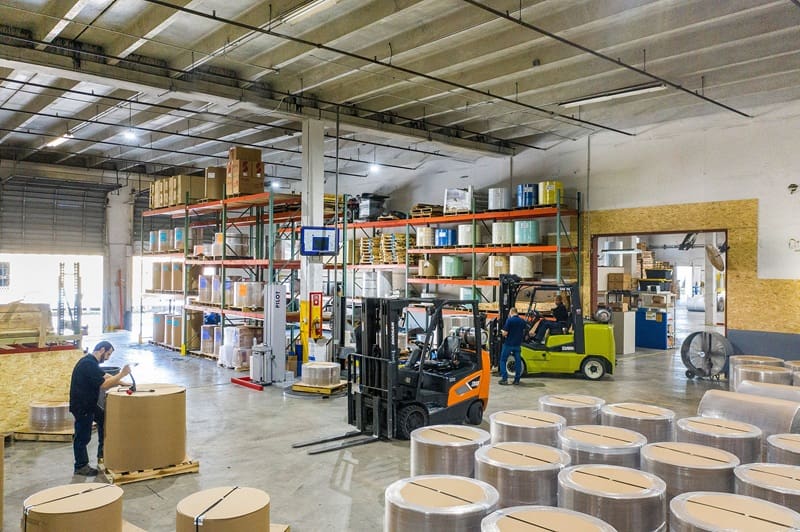
For manufacturers, accurate forecasting is critical to maintaining profitability. Yet many businesses still rely on spreadsheets, disconnected systems and manual reporting processes that make accurate forecasting difficult.

Selecting an ERP platform is one of the most important technology decisions a manufacturer can make.

Many manufacturing businesses invest in ERP software expecting immediate improvements in efficiency, reporting and operational control. However, the success of an ERP project depends on far more than the software itself.

To remain competitive in tough marketplaces, businesses need greater visibility across their operations and the ability to respond quickly to changing demand.

Capacity Planning in Business Central helps manufacturers balance production demand with available resources, improving throughput and reducing costly bottlenecks.

Manufacturing organisations are under increasing pressure to improve efficiency, reduce costs and maintain operational agility in an increasingly competitive market.

Manufacturers generate huge volumes of operational data every day, from production schedules and inventory movements to machine performance and supplier activity. The challenge is rarely a lack of information.

Manufacturers live and die by visibility: what’s running, what’s late, what’s costing more than planned, and where capacity is about to break.

Manufacturing businesses have always depended on precision, timing, and visibility. From raw material procurement through to final delivery, every inefficiency compounds into cost, delay, or lost margin.

For many manufacturing business leaders, the challenge within their operations is not a lack of data- but a lack of clarity, control and cohesion across operations. This is where manufacturing ERP software becomes critical.

The door manufacturing sector sits at the intersection of traditional craftsmanship and modern industrial efficiency.

Forecast accuracy has become one of the most difficult operational challenges to manage for manufacturers.

Modern supply chain strategy for manufacturers must extend beyond operational efficiency.

Manufacturers rarely fail to deliver because they don’t understand the importance of service or efficiency. They fail because the systems they rely on force them into compromises.

Manufacturing scale-up is where strategic ambition meets operational reality.

Manufacturing leaders are operating in a fundamentally different environment to the one that shaped traditional supply chain planning models.

In manufacturing, operational efficiency is inseparable from disciplined cost control. Overhead costs such as energy consumption, facilities, depreciation, and back-office functions may be indirect, but their impact on margin is very real.

Furniture manufacturing operates under constant pressure — from variable demand and complex product configurations to tight delivery expectations and rising input costs.

Inventory-centric businesses are under pressure: Retailers are juggling multi-channel sales, wholesalers are balancing supplier volatility with customer expectations, and manufacturers are navigating increasingly tight production schedules.

London’s manufacturing sector is undergoing a period of rapid transformation.
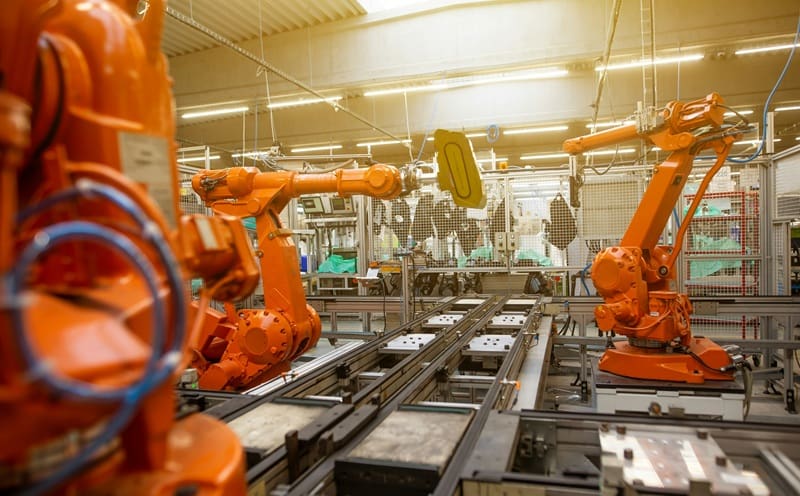
For manufacturers looking to modernise operations, improve visibility, and drive efficiency, implementing a Microsoft Manufacturing ERP Solution such as Dynamics 365 Business Central offers a rapid path to measurable results.

Kent’s manufacturing sector has evolved rapidly over the past decade. Firms that once operated on paper-based management, separate finance systems, or disconnected shop-floor tooling now face a more complex landscape: tighter margins, rising material costs, workforce shortages, and customer demand for faster, more transparent fulfilment.

Manufacturing is undergoing its most significant shift in decades. Competitive advantage is no longer dictated purely by production volume or labour cost – it is driven by agility, real-time intelligence and the ability to innovate at speed.

Discrete-manufacturing industries - think automotive, electronics, furniture and bespoke equipment -organisations need ERP systems that effortlessly manage complex assembly processes, inventory, orders and costing.

Process manufacturing demands precision, consistency, and complete operational oversight - qualities that are critical in industries such as food and beverage, chemicals, and pharmaceuticals.

Manufacturers face ever-evolving regulatory demands, from ISO standards to industry-specific legislation.

Manufacturers are under growing pressure to deliver operational efficiency, supply chain resilience, and data-driven decision-making—all while navigating global disruptions, rising energy costs, and talent shortages.

Microsoft’s 2025 Wave 2 release for Dynamics 365 Business Central brings a range of powerful new enhancements to its ERP platform.

Arrange A Demo Today
Discover Business Central, Dynamics 365 or SharePoint from our professional Microsoft consultants.
For more information and to arrange a demo please get in touch:
Contact Us