Offshore development plays a critical role in the future of energy and utilities. Whether supporting offshore wind farms, electricity transmission infrastructure, oil and gas platforms, or subsea assets, these environments are essential to energy security and commercial growth. But they’re also among the most complex operational settings to manage.
Unlike land-based operations, offshore environments are defined by distance, risk, cost, and limited access. Maintenance teams must operate across dispersed locations, often in poor weather, with strict safety requirements and high expectations around asset performance. Delays are expensive, downtime is disruptive, and fragmented systems can make effective coordination difficult. For many operators, the central challenge is not a lack of effort, but a lack of visibility and control.
This is where connected service management becomes increasingly important. Microsoft Dynamics 365 Field Service gives energy and utilities organisations a way to bring together asset data, scheduling, maintenance planning, mobile workflows, and service reporting within a single platform. For offshore operations, that can create a more proactive, efficient, and resilient operating model.
The Operational Reality Of Offshore Development
Offshore assets are difficult and costly to manage because every intervention is more complicated than it would be onshore. Getting the right engineer to the right site may involve specialist transport, vessel coordination, parts availability, weather monitoring, and compliance checks before work even begins.
If the fault diagnosis is incomplete or the wrong technician is deployed, a failed visit can add significant delay and cost.
At the same time, offshore assets are often business-critical. In wind energy, turbine downtime affects generation output and revenue. In utilities infrastructure, failures can affect resilience, service continuity, and maintenance backlogs. In oil and gas, the costs of disruption can be even more acute, with operational, safety, and environmental implications.
Because of this, offshore development places pressure on several areas at once: asset reliability, field service efficiency, workforce coordination, regulatory compliance, and long-term maintenance planning.
Many organisations still manage these areas across a mix of manual processes, disconnected systems, and reactive decision-making. That creates friction at exactly the point where precision matters most.
The Challenge Of Limited Visibility
One of the biggest barriers to efficient offshore operations is the lack of real-time visibility into asset condition and field activity. When assets are geographically distant and connectivity is inconsistent, it becomes harder to maintain an accurate picture of what is happening across the estate.
Without centralised and current information, teams may rely on delayed reports, spreadsheets, or isolated systems to assess asset performance and maintenance requirements. That makes it more difficult to identify risk early, prioritise interventions, or plan around failures before they occur. In practice, this often means maintenance is driven by routine schedules or urgent repair requests rather than actual asset condition.
Dynamics 365 Field Service helps address this challenge by creating a single operational view of service activity and equipment history. Offshore assets can be recorded within a centralised register, linked to work orders, service history, technician notes, and inspection records. This gives operational leaders and service teams a more complete understanding of each asset’s status, maintenance background, and outstanding issues.
That visibility becomes even more valuable when integrated with connected devices or condition monitoring systems. With the right setup, organisations can move beyond static records towards a live picture of asset performance, helping teams spot developing issues sooner and respond with greater confidence.
Reducing Costly Downtime Through Predictive Maintenance
In offshore environments, downtime is rarely just an engineering problem. It has commercial consequences, operational knock-on effects, and resource implications. A reactive approach to maintenance can quickly become expensive when access to assets depends on vessel availability, contractor mobilisation, specialist skills, and safe weather windows.
The more advanced alternative is predictive maintenance: identifying potential issues before they become failures and triggering action at the right time. Dynamics 365 Field Service supports this shift by enabling condition-based maintenance models, automated alerts, and work order creation tied to asset data.
For offshore operators, the value is clear. Instead of waiting for a breakdown or servicing equipment too frequently as a precaution, maintenance teams can act when the data suggests intervention is needed. This reduces unnecessary visits while also lowering the risk of emergency response scenarios.
For example, in an offshore wind environment, vibration, temperature, or performance anomalies could be used to flag an issue with a turbine component before it causes a shutdown. In utilities or subsea operations, early warning signs from connected equipment can help teams prioritise the most critical tasks and deploy resources more effectively.
This does not eliminate complexity, but it does create a more intelligent maintenance model — one that is better aligned to the realities of offshore asset management.
Managing Scheduling Complexity In Difficult Environments
Workforce coordination is another major offshore challenge. Field service scheduling is difficult enough in standard environments, but offshore work introduces additional layers of complexity. Technicians may need specific certifications, experience with certain asset types, or access to specialist tools. Travel may depend on marine or air logistics. Jobs may need to be grouped into efficient windows based on location, urgency, and weather conditions.
Poor scheduling leads to wasted time, inflated cost, and increased risk of repeat visits. It also places strain on engineering teams and service managers trying to balance competing priorities.
Dynamics 365 Field Service helps improve this process through intelligent resource scheduling. Service organisations can match work orders to engineer skills, availability, territory, and priority, while also taking account of travel and operational constraints. For offshore settings, this can support more efficient mobilisation decisions and reduce the friction that comes from manual planning.
Where organisations use Resource Scheduling Optimisation, there is also an opportunity to automate parts of the decision-making process. This can help identify the best available resource for a job, reduce scheduling delays, and improve first-time fix potential by ensuring technicians arrive with the right information and capabilities.
In an offshore setting, that level of scheduling precision matters. Every unnecessary trip has a cost, and every failed visit can impact uptime, service levels, and project delivery.
Equipping Engineers To Work Effectively Offshore
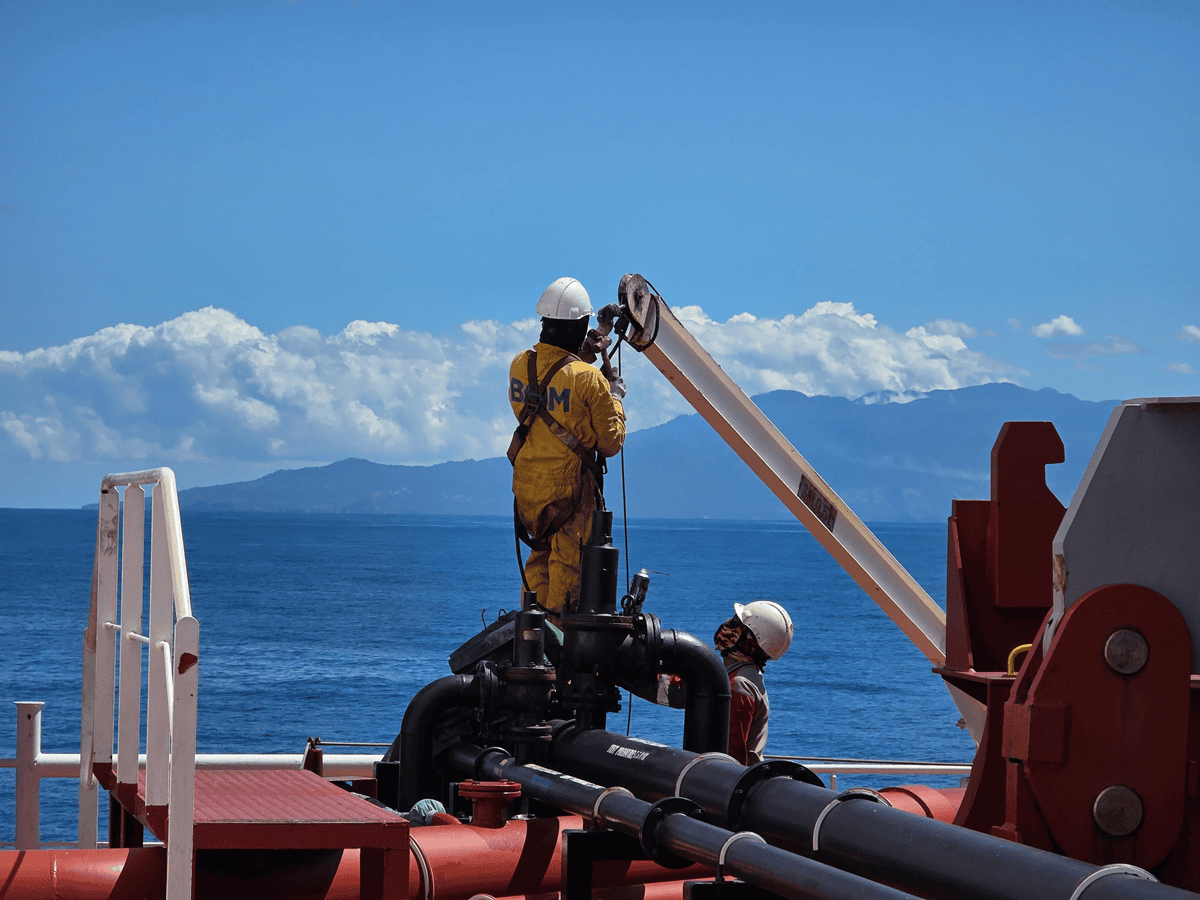
Even the best planning can fall short if field engineers do not have the right information when they are on site. Offshore teams often work in low-connectivity environments where access to live systems cannot be guaranteed. If critical data sits in back-office platforms that are unavailable in the field, technicians may be forced to rely on paper records, memory, or incomplete job details.
Dynamics 365 Field Service addresses this through a mobile application designed for field use, including offline capabilities. Engineers can access work orders, service history, asset details, manuals, and checklists from a mobile device, even where connectivity is limited. They can also record inspection results, update job status, capture photographs, and enter notes while on site, with data synchronising once a connection is restored.
For offshore operations, this improves both execution and reporting. Engineers are better equipped to diagnose issues, complete tasks consistently, and document activity accurately. Service leaders benefit from more reliable field data, reducing delays in reporting and improving visibility across ongoing jobs.
It also supports continuity. If skilled technicians are working across complex offshore estates, having structured digital workflows helps standardise service delivery and reduce variation between teams, contractors, or locations.
Strengthening Safety And Compliance Processes
Safety is central to every offshore operation. Work is carried out in high-risk environments, often under demanding conditions, with strict regulatory oversight and internal governance requirements. In this context, service management systems need to support not only efficiency, but also consistency, traceability, and accountability.
Manual processes can create problems here. Paper-based forms, disconnected reporting, and inconsistent completion of checklists all increase the risk of gaps in audit trails or missed procedural steps. When teams are operating under time pressure, relying on fragmented admin processes makes compliance harder to sustain.
Dynamics 365 Field Service can help embed safety and compliance into day-to-day workflows. Digital inspections, checklists, and work order processes can be standardised so that required steps are completed as part of the job itself. Key records can be captured in real time and stored centrally, making it easier to demonstrate compliance, review service history, and support audits.
For energy and utilities organisations, this is important not only from a regulatory standpoint but also from an operational one. Better process discipline reduces risk, improves reporting quality, and gives managers greater confidence that standards are being followed consistently across offshore teams and contractors.
Creating A More Connected Operational Model
Another challenge in offshore development is fragmentation. Service delivery often depends on multiple parties: internal teams, subcontractors, logistics providers, specialist engineers, and parts suppliers. If each part of the process is managed separately, delays and miscommunication become more likely.
Dynamics 365 Field Service supports a more integrated operating model by bringing together service activity, asset records, scheduling data, and workflow information in one place. When paired with wider Microsoft technologies, such as Azure IoT and Power Platform, organisations can build a broader digital ecosystem around offshore operations.
That could include connected monitoring data from critical assets, automated notifications triggered by performance thresholds, dashboards for operational KPIs, and workflow automation for approvals or follow-up actions. Some organisations may also explore integration with digital twin models to support asset planning, scenario modelling, and more advanced maintenance strategies.
The key benefit is not the technology in isolation, but the ability to reduce disconnects between planning, field execution, reporting, and long-term decision-making. Offshore operations are too complex to manage effectively through siloed systems. A connected field service platform helps break down those silos.
The Business Impact For Energy And Utilities Organisations
For offshore development in energy and utilities, the value of Dynamics 365 Field Service lies in its ability to address practical operational challenges in a structured, scalable way.
By improving visibility across assets and service activity, organisations can make faster and better-informed decisions. By supporting predictive maintenance, they can reduce unplanned downtime and avoid unnecessary interventions. By optimising scheduling, they can make better use of scarce engineering resources and reduce mobilisation costs. By equipping field teams with mobile tools, they can improve job execution in remote environments. And by standardising safety and compliance processes, they can strengthen governance while reducing administrative friction.
Taken together, these capabilities support several important outcomes:
- lower operational cost
- increased asset uptime and reliability
- improved engineering productivity
- stronger safety and compliance performance
- better service data for continuous improvement and strategic planning
For organisations investing in offshore infrastructure, these are not marginal gains. They are core enablers of resilience, efficiency, and long-term performance.
As offshore operations continue to grow in complexity, energy and utilities providers need service models that are more connected, proactive, and data-driven. Dynamics 365 Field Service offers a way to move in that direction: not by replacing operational expertise, but by giving teams the tools and insight to apply it more effectively.