Fresh produce distribution has always been a business where tight margins meet operational complexity. Products have a limited shelf life, availability changes seasonally and customer demand can fluctuate quickly.
Add increasingly complex supply chains and demanding customer expectations, and those inefficiencies can have a significant commercial impact.
For many fresh produce distributors, the challenge is not necessarily a lack of information. It is that the information required to make effective decisions is spread across too many places.
Stock data may sit within an ERP or warehouse system, purchasing teams might maintain additional spreadsheets, finance operates from another view of the business and sales teams may be working from separate customer information.
Individually, these systems may still work. Collectively, however, they can make it difficult to answer some of the most commercially important questions in fresh produce distribution:
- What stock do we actually have?
- Which products need to be sold first?
- What should we purchase next?
- Which lines are generating the strongest margins?
- And where is avoidable waste occurring?
Increasingly, technology is helping fresh produce businesses answer these questions faster, managing operations with greater accuracy.
The Cost Of Poor Inventory Visibility
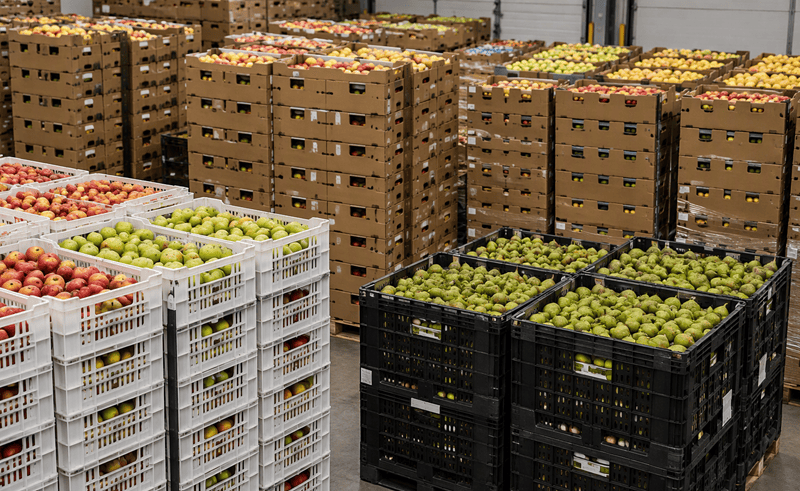
Inventory management is a challenge for almost every distributor, but fresh produce introduces another factor: time.
Unlike products that can remain in a warehouse indefinitely, fresh produce continually moves towards the point at which its commercial value declines or disappears altogether.
That makes accurate stock information particularly important.
Warehouse, purchasing and sales teams need a clear understanding of what inventory is available, where it is held, the batch it belongs to and how long it can realistically remain in stock.
When this information is fragmented across systems, decisions become harder.
Older stock can remain in the warehouse while newer stock is dispatched. Purchasing teams may order more inventory without an accurate understanding of what is already available. Meanwhile, sales teams may not know that particular stock needs to be prioritised.
Better inventory visibility provides an opportunity to make decisions before stock becomes a problem rather than reacting afterwards.
Reducing Waste Is Also About Protecting Margin
Food waste is often discussed as an operational or sustainability issue. For distributors, it is also a financial one.
Every product written off represents inventory that has been purchased, transported, handled and potentially stored but has generated no sales revenue.
This means improving waste levels is closely connected to improving profitability.
Better technology can help distributors monitor inventory according to expiry dates, batches and stock movements. Rather than relying on individuals to spot ageing products manually, organisations can create a much clearer operational picture of their inventory.
This supports processes such as First Expired, First Out (FEFO), where products approaching the end of their usable life can be prioritised for dispatch.
Reducing waste does not therefore necessarily require dramatic changes to the supply chain. Sometimes the biggest opportunity comes from making existing processes more visible and consistent.
Better Purchasing Decisions
The tension between product availability and overstocking is particularly pronounced in fresh produce.
Order too little and distributors risk being unable to fulfil customer demand. Order too much and the business may be left holding produce that needs to be sold quickly or written off.
Purchasing decisions therefore become considerably stronger when buyers can see sales history, current inventory, outstanding orders and customer demand together.
This is where moving away from isolated spreadsheets and disconnected applications can make a major difference.
Rather than analysing different sources independently, decision-makers can work from a more connected view of operations.
Over time, better information can support more informed purchasing decisions, improve inventory turnover and reduce the likelihood of both shortages and excess stock.
Traceability From Grower To Customer
Inventory visibility represents only part of the challenge for fresh produce distributors. Businesses also need a clear understanding of where products came from, how they have moved through the supply chain and where they ultimately went.
Effective batch and lot traceability can create a digital record from goods receipt through warehousing and fulfilment to the customer.
This gives teams greater visibility over product movements while supporting provenance, food safety requirements and customer expectations.
Should a quality concern arise, accurate digital records can also make it easier to identify affected batches, establish where stock is located and understand the associated movements.
For fresh produce distributors dealing with growing numbers of suppliers, product lines, locations and customers, bringing this information together can provide greater control over an increasingly complex supply chain.
Making Warehouses More Efficient
Warehouse performance is another area where relatively small inefficiencies can accumulate.
Goods are constantly being received, stored, picked, transferred and dispatched. At each point there is the potential for unnecessary administrative work or inaccurate information.
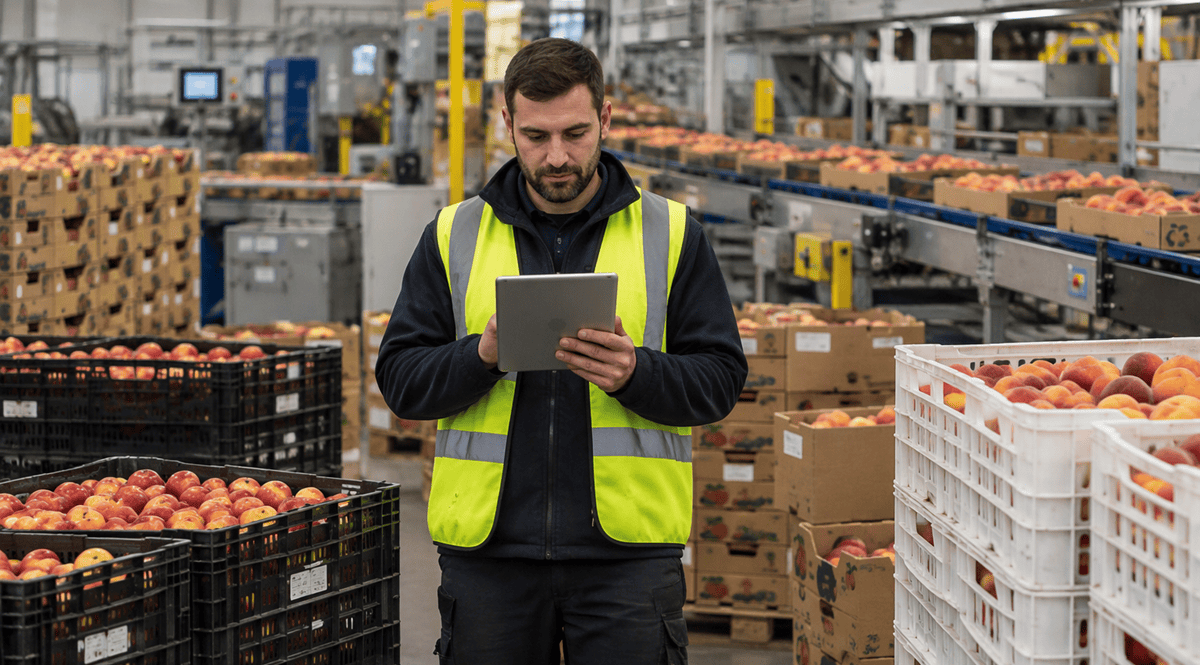
Modern business systems can provide warehouse teams with better visibility of stock locations, picking activities, goods receipts, transfers and dispatches.
In practical terms, this means people spend less time trying to establish what is happening and more time acting on accurate information.
For distributors operating multiple warehouses or cold storage locations, joined-up visibility becomes even more valuable.
Moving Beyond Spreadsheets
Spreadsheets remain incredibly useful tools, but problems arise when they become an informal operational system.
One spreadsheet becomes a purchasing tracker. Another monitors warehouse stock. Another supports monthly reporting.
Soon, the business has important information in multiple locations, with different people responsible for maintaining different versions of the truth.
Growth tends to expose these limitations; more suppliers, customers, warehouses and product lines mean more data and more processes to coordinate.
Technology should remove that complexity rather than create another layer of it.
The objective is not simply to replace spreadsheets. It is to connect finance, inventory, purchasing, warehousing, sales and reporting so that information can move more effectively through the organisation.
Creating A More Connected Fresh Produce Business
For fresh produce distributors, digital transformation does not have to mean replacing everything at once.
The more important objective is creating a technology platform capable of connecting the key areas of the business and providing greater visibility over operations.
Modern cloud business platforms can bring ERP, data analytics, workflow automation, business applications and increasingly AI capabilities into a connected environment.
For example, Microsoft technologies such as Dynamics 365, Power Platform, Power BI and Microsoft 365 can form different parts of a connected technology environment, helping organisations move away from isolated systems and manual processes.
For fresh produce businesses, the ultimate objective is not technology for technology's sake. It is having better information available when operational and commercial decisions need to be made.
That could mean recognising ageing inventory sooner, giving purchasing teams a clearer picture of stock requirements, improving traceability or providing management with greater visibility of performance.
For an industry where the value of inventory can change quickly, that visibility can make a tangible difference.
Reducing Waste With Technology: Next Steps
Akita works with food and fruit distribution organisations to modernise operations using Microsoft business technology, including Dynamics 365, Power Platform, Power BI and Microsoft 365.
By bringing together areas such as inventory, purchasing, finance, warehouse operations, reporting and automation, fresh produce distributors can create a more connected view of their operations and reduce their reliance on disconnected processes.
If disconnected systems, manual processes or limited stock visibility are restricting your operation, speak to Akita about creating a more connected technology platform for your distribution business.