Unplanned downtime continues to present a significant operational and financial challenge.
. It disrupts service delivery, impacts contractual performance, and accelerates asset degradation. At the same time, maintenance budgets are under increasing scrutiny, with organisations expected to do more with fewer resources.
The reality is that many maintenance strategies are still rooted in outdated approaches. Reactive interventions and static servicing schedules no longer align with the complexity of modern operations. A Microsoft Dynamics 365 asset management solution offers a more intelligent alternative - one that brings together data, automation, and insight to reduce unplanned downtime while extending asset life.
Moving Beyond Reactive Maintenance
Reactive maintenance remains one of the most expensive ways to manage assets. When organisations rely on fixing issues only after failure, they expose themselves to avoidable disruption and escalating costs. Emergency repairs are rarely efficient, and they often create knock-on effects across operations.
Dynamics 365 enables a structured shift away from this model. By centralising asset data and embedding maintenance workflows, it allows organisations to plan and prioritise activity based on real-world conditions rather than assumptions. This transition creates a more stable operating environment, where maintenance becomes a controlled and strategic function rather than a reactive necessity.
Creating End-To-End Asset Visibility
A common barrier to improving asset performance is a lack of visibility. When information is dispersed across systems, teams are forced to make decisions without a complete picture. This increases risk and limits the ability to identify underlying issues.
Utilising Microsoft Dynamics 365 asset management provides a unified view of the entire asset estate. From a single platform, organisations can monitor asset condition, review historical performance, and track utilisation across sites. This real-time visibility enables faster, more informed decision-making.
More importantly, it allows patterns to emerge. Recurring faults, performance degradation, and inefficiencies can be identified early, enabling intervention before they lead to failure. This is a critical step in any strategy designed to reduce unplanned downtime.
Reducing Maintenance Costs With Predictive Maintenance
Predictive maintenance represents a fundamental shift in how maintenance is approached. Rather than relying on fixed schedules or reacting to failures, organisations can use data to anticipate when an asset is likely to require attention.
Dynamics 365 works for this by enabling continuous monitoring and analysis of asset performance. When combined with IoT data and advanced analytics, it becomes possible to detect early warning signs of failure, such as abnormal usage patterns or changes in operating conditions.
This allows maintenance to be carried out at precisely the right time. The result is a reduction in unnecessary servicing, fewer unexpected breakdowns, and a more efficient use of resources. In practical terms, supporting the objective of reducing maintenance costs with predictive maintenance, while also improving asset reliability.
Strengthening Preventive Maintenance Software Capabilities
While predictive maintenance continues to evolve, preventive maintenance software remains a critical component of effective asset management. Scheduled servicing ensures that assets are maintained consistently, reducing the likelihood of sudden failure.
Dynamics 365 enhances preventive maintenance by making it more dynamic and responsive. Maintenance schedules can be based on time, usage, or specific operational thresholds, and they can be adjusted as new data becomes available. This ensures that maintenance activity reflects actual asset behaviour rather than static assumptions.
The result is a more balanced approach, where assets are neither over-maintained nor neglected. This improves performance while also contributing to longer asset lifecycles.
Streamlining Maintenance Execution
Even with the right maintenance strategy in place, execution remains a key factor in reducing downtime. Delays in response, poor coordination, and lack of visibility over resources can all extend outages unnecessarily.
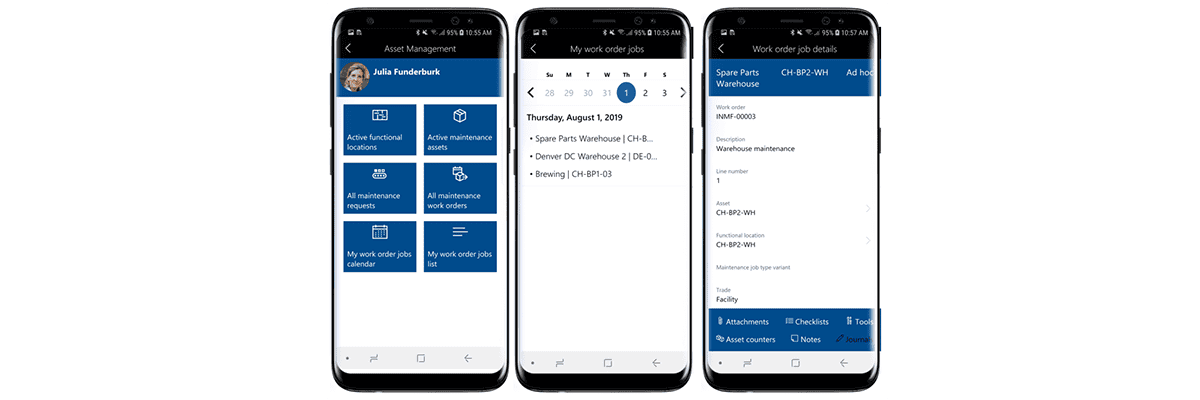
Dynamics 365 introduces a more structured approach to work order management. Maintenance activities can be automatically generated, assigned, and tracked within the platform, ensuring that the right people have the right information at the right time.
This level of coordination reduces response times and improves the efficiency of maintenance teams. Issues are resolved more quickly, and the overall impact of downtime is minimised.
Optimising Asset Lifecycle Management
Extending asset life requires a broader perspective than maintenance alone. Organisations need to understand how assets perform over time, how costs evolve, and when intervention or replacement is required.
Dynamics 365 asset management provides full lifecycle visibility, enabling organisations to track performance from acquisition through to disposal. This allows for more informed decision-making around capital investment, ensuring that assets are used effectively without being overextended.
By aligning operational performance with financial insight, organisations can maximise the value of their asset base while avoiding unnecessary expenditure.
Using Data To Drive Continuous Improvement
Data is central to improving asset performance, but its value lies in how it is applied. Dynamics 365 provides advanced analytics that allow organisations to measure key indicators such as downtime trends, maintenance efficiency, and asset utilisation.
These insights enable continuous improvement. Patterns can be identified, root causes addressed, and strategies refined over time. This creates a cycle of ongoing optimisation, where maintenance approaches evolve in line with operational realities.
In this context, reducing unplanned downtime becomes an achievable, measurable objective rather than an ongoing challenge.
Connecting Asset Management With Wider Operations
One of the defining advantages of Dynamics 365 is its ability to integrate asset management with broader business functions. Maintenance does not operate in isolation, and its effectiveness is often dependent on how well it aligns with other areas such as finance, procurement, and field service.
By connecting these functions, Dynamics 365 creates a unified operational environment. Spare parts availability can be aligned with maintenance schedules, financial impacts can be clearly understood, and field teams can operate with real-time information.
This level of integration reduces inefficiencies and ensures that maintenance activities are fully aligned with organisational objectives.
Driving Long-Term Operational Efficiency
Reducing unplanned downtime and extending asset life are not isolated goals. They form part of a wider strategy focused on improving operational efficiency, resilience, and profitability.
Dynamics 365 helps this by enabling organisations to operate with greater control and intelligence. Maintenance becomes more predictable, assets perform more reliably, and costs are managed more effectively.
Over time, this creates a stronger, more agile organisation—one that is better equipped to respond to change and deliver consistent performance.
How Akita And Dynamics 365 Can Deliver Your Facilities Management Strategy
Akita Intelligent Solutions provides tailored Dynamics 365 for facilities management, helping organisations move from reactive maintenance models to fully connected, data-driven operations.
From implementing Dynamics 365 asset management to optimising preventive maintenance software and enabling predictive maintenance strategies, Akita delivers the expertise and structure required to drive long-term operational improvements.
Whether the objective is to reduce unplanned downtime, extend asset life, or improve cost control, the focus remains the same: delivering measurable outcomes through smarter use of technology.