
Facilities management organisations operate in a high-pressure environment. The commercial challenge is consistent: deliver dependable service while protecting margin.
Inefficiency rarely sits in one obvious place. It tends to emerge through disconnected systems, reactive scheduling, fragmented compliance records and limited financial visibility.
Service management in Business Central provides a structured, scalable way to address these operational pressures and build a more resilient service model.
Service Management In Business Central: Powering Facilities Management Operations
Business Central includes integrated functionality to manage service contracts, planned maintenance, service orders, resource allocation and billing within one unified ERP platform.
Service management in Business Central connects operational delivery directly with finance, ensuring every job contributes accurately to revenue reporting and margin analysis.
For facilities management providers, this translates into:
- Centralised management of service contracts and SLAs
- Planned preventative maintenance scheduling
- Real-time job costing and profitability tracking
- Integrated inventory and spare parts control
- Automated contract billing and invoicing
Rather than relying on separate systems for finance, scheduling and field operations, organisations gain a single source of truth across the service lifecycle.
Sector Applications: Where Efficiency Gains Are Most Visible
The functionality adapts across core facilities management disciplines:
Building maintenance and reactive repairs:
- Log service requests against specific assets
- Track response times against SLAs
- Capture labour and materials for accurate cost recovery
HVAC, plumbing and water hygiene:
- Schedule recurring inspections
- Maintain full asset and compliance histories
- Produce audit-ready documentation
Lift, escalator and access systems:
- Track equipment by serial number
- Monitor warranty status
- Plan maintenance cycles aligned to asset lifecycle
Cleaning, waste and grounds maintenance:
- Manage contract-based billing models
- Plan workforce capacity
- Track consumables and route efficiency
Operational Improvements By Functional Area
Instead of multiple disconnected workflows, Business Central unifies service and finance processes. The practical impact for facilities management teams can be summarised as follows:
| OPERATIONAL AREA | EFFICIENCY CHALLENGE | BUSINESS CENTRAL IMPACT |
| Scheduling | Manual allocation and double booking | Real-time resource visibility and skill-based assignment |
| Compliance | Missed inspections and incomplete records | Automated maintenance cycles and full asset histories |
| Job Costing | Limited margin visibility | Live labour and materials tracking per service order |
| Inventory | Over-ordering or stock shortages | Integrated stock management linked to service demand |
| Billing | Delayed invoicing and revenue leakage | Automatic conversion of service orders to invoices |
| Reporting | Fragmented performance data | Consolidated contract and SLA performance dashboards |
This alignment reduces administrative burden while strengthening commercial oversight.
Reducing Administrative Burden
Facilities management teams often duplicate data entry across service tools and finance systems.
Service management in Business Central removes that fragmentation by linking service orders directly to general ledger entries, work in progress reporting and purchasing processes. The result is faster invoicing, improved cash flow and clearer financial accountability.
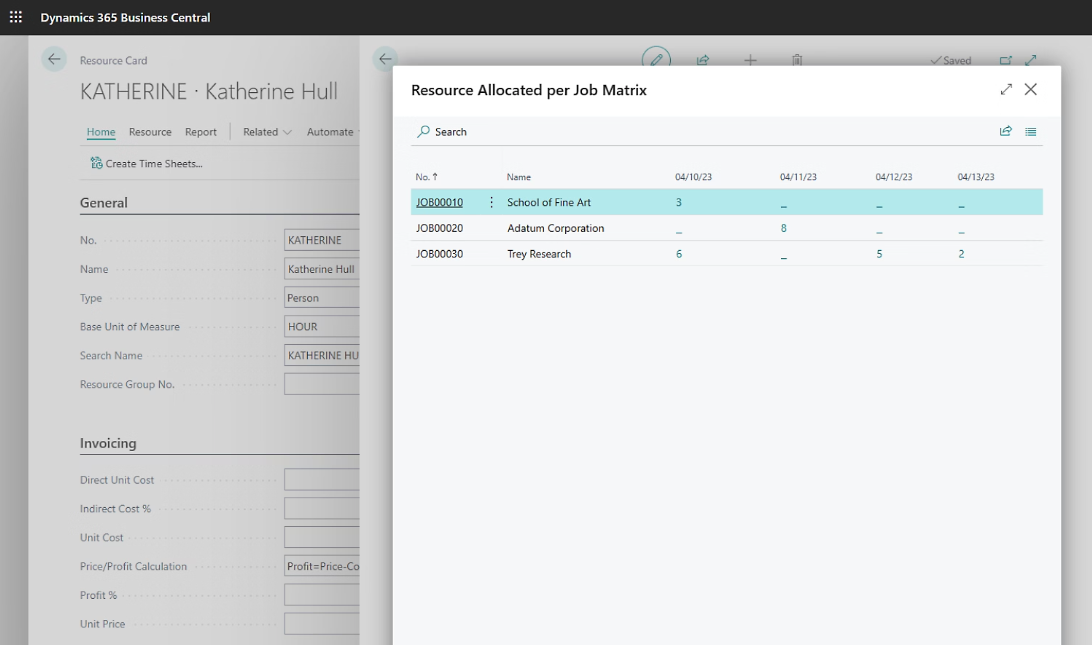
Improving Workforce Productivity And Contract Profitability
Labour is typically the largest cost centre in facilities management. Without structured visibility, overtime, subcontractor reliance and scheduling inefficiencies erode margin.
By consolidating operational and financial data, leaders gain oversight of resource capacity, first-time fix rates, contract profitability and SLA adherence. Service management in Business Central enables data-led decisions around hiring, pricing, route planning and contract renewals, supporting sustainable growth rather than reactive expansion.
Scalability For Growth And Multi-Site Operations
As facilities management providers expand across regions or service lines, process consistency becomes essential. A unified service model supports:
- Standardised service workflows
- Faster onboarding of new contracts
- Consistent SLA reporting across branches
- Simplified integration of acquisitions
For organisations targeting framework agreements or multi-site corporate contracts, operational maturity and financial transparency become competitive differentiators.
Driving Benefits
Facilities management businesses operate in a margin-sensitive, compliance-heavy environment. By connecting service delivery directly with finance and reporting, organisations gain stronger cost control, improved SLA performance and enhanced client retention.