
Kerridge Commercial Systems’ acquisition of Lakeview marked a significant shift for organisations using the long-established Lakeview CRM/ERP platform. The product’s evolution into K8 LV signalled a transition from an independent ERP option to one incorporated into a broader, distribution-focused software suite.
What was once a flexible, mid-market solution has now become part of a distribution-focused suite. While this works well for businesses aligned to Kerridge’s core industries, many long-term Lakeview users—especially those outside wholesale and merchant sectors—are questioning whether the platform still supports their future ambitions.
Technology expectations have changed significantly over the last decade. Modern ERP is no longer simply about transactional accuracy. Organisations now demand cloud scalability, real-time analytics, seamless integration, workflow automation, and a platform that evolves continuously. When assessing Lakeview vs Dynamics 365, organisations increasingly realise that Microsoft’s ecosystem delivers this broader capability far more effectively.
This shift is driving growing interest in migration from legacy Lakeview systems to Microsoft Dynamics 365. And for many businesses, the move is as much about opportunity as it is necessity.
The Challenges Of Remaining On Older Lakeview Systems
Companies still running pre-K8 Lakeview platforms face a familiar set of constraints, largely caused by technology architecture that was never designed to meet today’s demands. Most installations still operate on-premises, tied to ageing servers and outdated databases that are expensive to maintain and difficult to scale. As organisations shift towards cloud-first strategies, these older systems increasingly act as a barrier rather than a foundation.
Some of the most common challenges include:
• Limited integration capability, with legacy Lakeview setups struggling to connect cleanly to third-party platforms, automation tools, customer-facing systems, and modern data environments. Organisations often end up relying on workarounds, manual exports, and custom scripts that erode efficiency and increase error risk.
• Restrictive reporting and analytics functionality. Modern businesses expect real-time dashboards, predictive insights, and interactive analysis—capabilities that older Lakeview systems can only approximate through heavy custom development. Even when enhancements are made, the output rarely matches what’s possible with today’s cloud analytics tools.
• Increasing reliance on a shrinking pool of specialists. As Lakeview becomes an older, less common technology, fewer people possess the skills to support and maintain it. Many organisations find themselves dependent on one or two internal experts or external consultants, creating operational risk and limiting the ability to innovate.
These operational pressures sit alongside growing strategic uncertainty. With Lakeview now absorbed into Kerridge’s K8 LV product line, its future development naturally reflects Kerridge’s core markets. Organisations outside those sectors are questioning whether continued investment aligns with their own long-term objectives. This concern is driving many decision-makers to re-evaluate whether remaining on Lakeview carries unnecessary risk and whether it is time to transition to a platform built for the future.
Why Microsoft Dynamics 365 Has Become The Natural Next Step
Microsoft Dynamics 365 stands in sharp contrast to legacy ERP platforms. Rather than retrofitting cloud capabilities onto an ageing architecture, Dynamics 365 was designed from the outset as a modern, cloud-native environment. For organisations comparing Lakeview vs Dynamics 365, this architectural difference is one of the clearest reasons Microsoft is winning out.
Dynamics 365 provides a continuously updated solution that removes the burden of maintenance and version control. There are no disruptive upgrade projects, no large-scale hardware refreshes, and no reliance on legacy codebases. The system evolves automatically, giving organisations regular improvements in performance, security, and functionality.
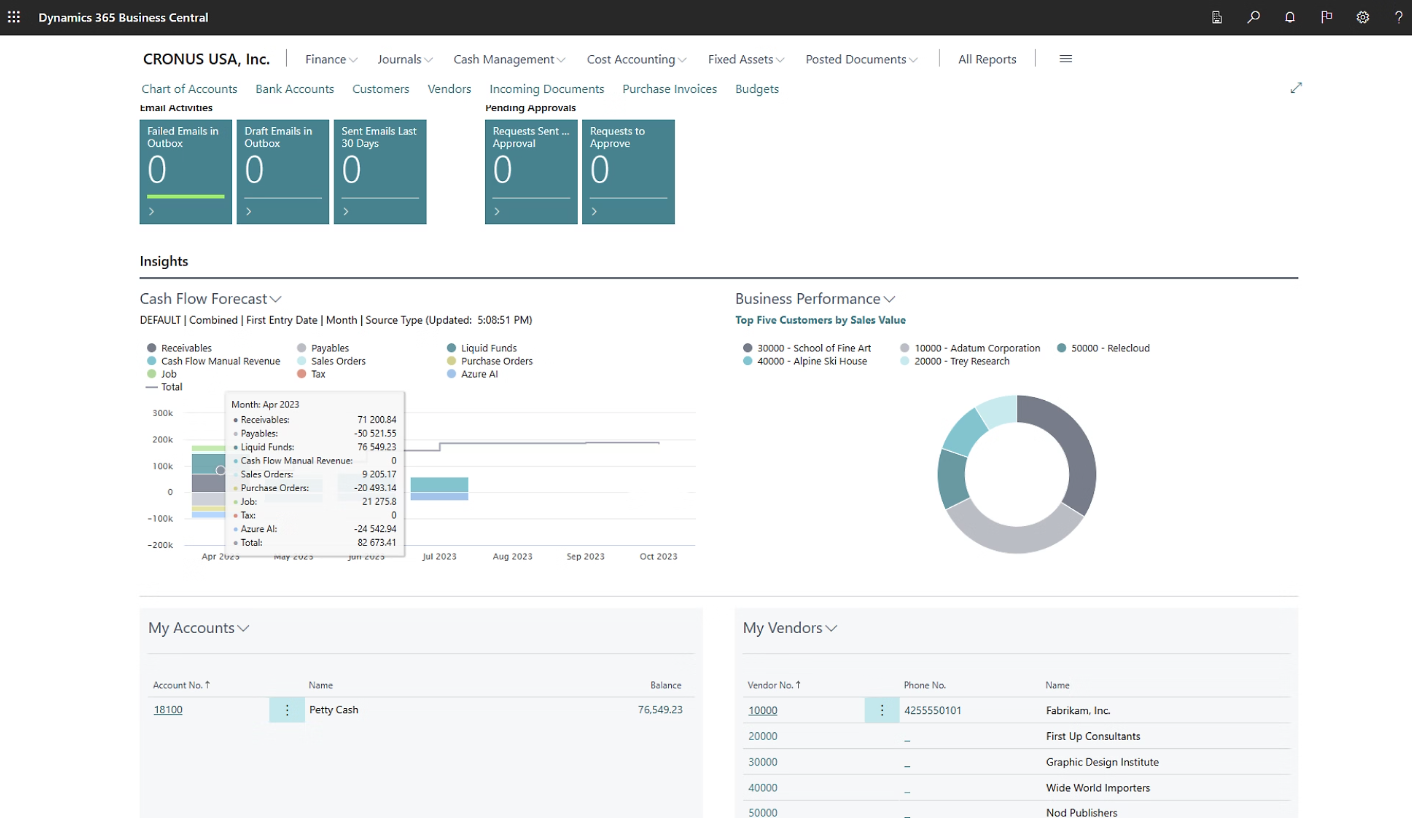
What sets Microsoft apart, however, is the breadth of integration across its wider ecosystem. Businesses typically already rely on Microsoft 365, Teams, Azure, Power BI, and a wide range of collaboration tools. Dynamics 365 connects seamlessly with all of them. This creates a unified operating environment where data flows freely, processes align, and insight is available wherever people work.
Reporting becomes dramatically more powerful. Power BI, Microsoft Fabric, and Azure data services enable real-time dashboards, predictive models, automated insights, and consolidated reporting across the entire organisation. Instead of exporting Lakeview data into spreadsheets or third-party tools, decision-makers get one overarching analytical framework that spans finance, operations, sales, service, and supply chain. The intelligence within Dynamics 365 also operates at workflow level rather than sitting outside it. Organisations benefit from automation, forecasting, anomaly detection, and guided decision-making built directly into everyday processes. Stock levels, cashflow forecasts, customer sentiment, lead scoring, and operational KPIs become part of how the business runs—not a separate reporting exercise completed at month-end.
Scalability plays an equally important role. Dynamics 365 supports complex multi-company, multi-currency, multi-warehouse operations without the architectural constraints that often frustrate legacy Lakeview users. Organisations expecting growth, acquisitions, or structural change can expand confidently knowing the platform can adapt without extensive redevelopment.
Perhaps the most compelling factor is the long-term economics. While a migration project requires investment, the cloud operating model dramatically reduces ongoing cost. Infrastructure disappears. Upgrade budgets disappear. Manual reporting disappears. Support dependency reduces. Automation and AI offset administrative workload.
The result is a lower total cost of ownership and a platform that continues to deliver increasing value over time.
The Migration Opportunity: Moving From Lakeview To Dynamics 365
For organisations considering the transition, the migration represents more than a system replacement — it is an opportunity to modernise processes, improve data governance, and enhance customer experience.
Key benefits include:
- Improved workflow automation - Processes that once required manual effort in Lakeview can be fully automated in Dynamics 365, freeing staff for higher-value activity.
- Better visibility across the organisation -Power BI and Fabric deliver cross-business intelligence unavailable in legacy environments, strengthening forecasting, planning, and strategic decision-making.
- Streamlined customer experience - Dynamics 365 integrates CRM and ERP natively, enabling unified customer records and consistent engagement from sales to service.
- Greater security and compliance - Microsoft’s cyber security standards exceed what most organisations can achieve with on-premises Lakeview deployments, reducing risk and strengthening governance.
- A platform designed for the next decade - Dynamics 365 is continuously updated, ensuring organisations stay ahead of industry expectations without undertaking disruptive upgrade cycles.
Lakeview vs Dynamics 365 As A Strategic Discussion
When organisations explore alternatives, the real comparison becomes less about features and more about direction. Lakeview, particularly in its legacy form, reflects an earlier era of ERP. Dynamics 365 represents a cloud-first, insight-driven, integrated approach to business management that aligns with modern expectations.
The decision usually becomes clear when leadership teams ask questions such as:
• Does our current system help us grow or hold us back?
• Can we achieve the integration and automation we need for the next five to ten years?
• Are we confident the platform will still meet our needs as we scale or diversify?
• Do we have access to the skills required to support and optimise it?
• Does it enable us to become a data-driven organisation, or does it require workarounds?
For many long-term Lakeview users, the answer leads them toward Microsoft’s ecosystem.
The Turning Point For Legacy Lakeview Organisations
The move from Lakeview to Dynamics 365 is not just about reacting to an acquisition or replacing old software. It is about choosing a platform that supports growth, encourages innovation, and integrates seamlessly with the digital tools organisations rely on every day.
Those who modernise early capture the benefits faster—better insight, improved efficiency, stronger customer experience, and an operating model ready for AI-driven transformation. Those who stay on legacy systems for too long often find themselves constrained by technology debt, rising support challenges, and missed opportunities for competitive advantage.
In the landscape of Lakeview vs Dynamics 365, the direction of travel is unmistakable. Organisations want cloud capability, integrated analytics, scalable architecture, and continuous innovation. Microsoft delivers all of this in one ecosystem, making it the logical choice for businesses preparing for the next stage of growth.
Akita supports organisations on their journey away from Lakeview and Kerridge systems. For more information please get in touch: