
For facilities organisations under pressure to protect margins, cost-per-visit has become one of the most telling performance indicators.
It quietly reflects how well scheduling works, how prepared engineers are, and how efficiently information moves across the business. When that figure creeps up, it is usually a sign that operational friction is building somewhere in the system.
It’s here that a modern CRM for facilities management starts to earn its keep: Not as another layer of technology, but as a practical way to bring clarity, structure, and momentum back into day-to-day operations.
Why Cost-Per-Visit Keeps Rising (And Why It Is Hard To Control)
Most leadership teams know their cost-per-visit number. But fewer can confidently explain why it is rising or what levers will bring it back down.
The reality is that inefficiency rarely comes from one obvious failure. It builds gradually through disconnected systems, incomplete job information, reactive scheduling, and manual processes that no longer scale. Engineers arrive on site without the full picture. Dispatchers spend their day reshuffling work. Managers rely on lagging reports rather than real-time insight.
Over time, this leads to repeat visits, underutilised resources, and rising overheads, even when teams are working flat out.
What A CRM For Facilities Management Changes In Practice
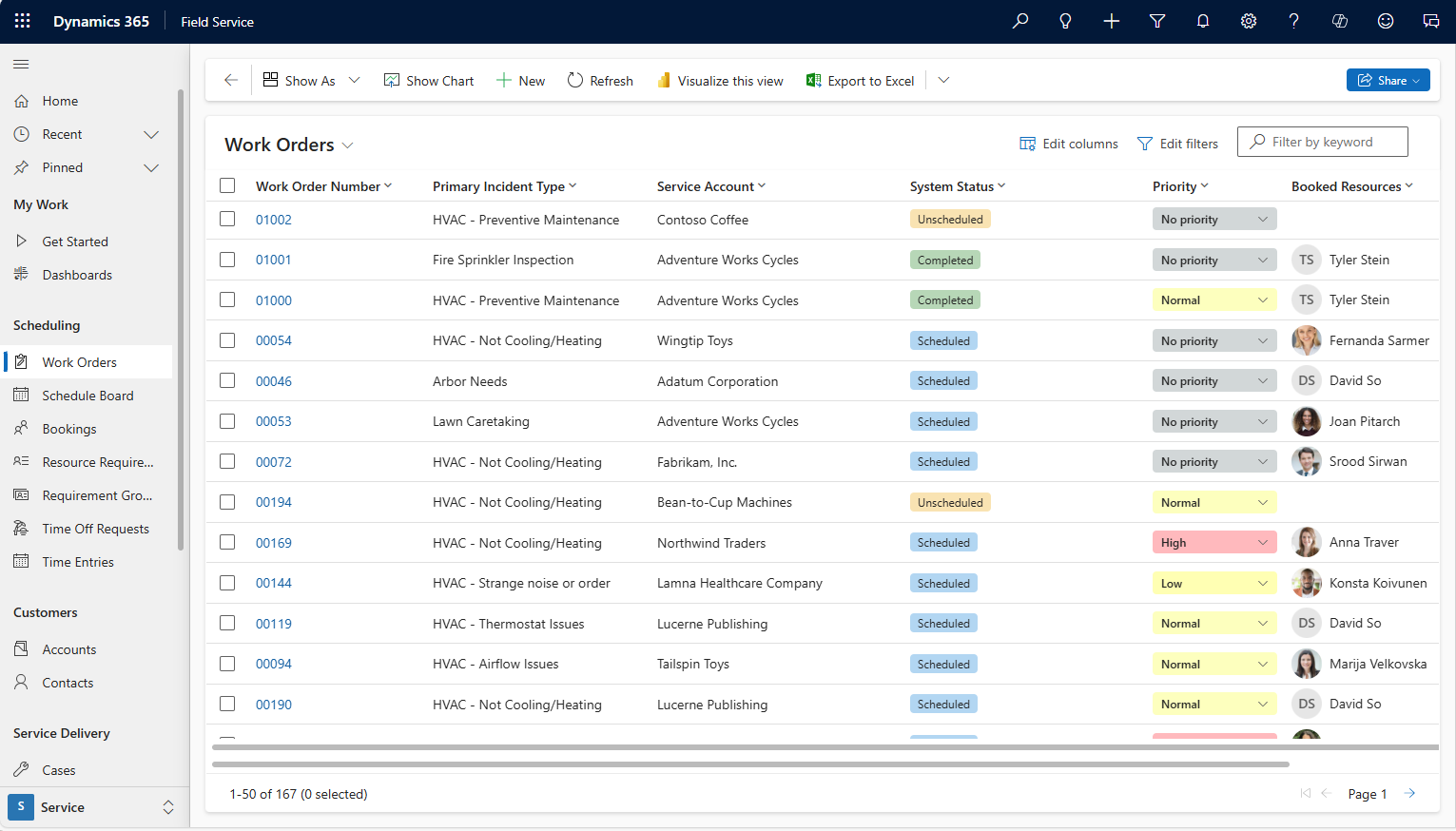
Using a CRM for facilities management is not just about managing contacts or logging jobs. When correctly designed around operational workflows, it becomes the system that connects customers, sites, assets, engineers, and service history into a single, coherent view.
This approach brings consistency and intelligence to every stage of the service lifecycle. Information is no longer scattered across inboxes, spreadsheets, and legacy tools. Instead, teams work from a shared source of truth.
This alone removes a surprising amount of friction from daily operations.
Reducing Repeat Visits Starts With Better Context
Repeat visits are one of the fastest ways to inflate cost-per-visit. They usually happen because the right information was not available at the right time.
With a Microsoft CRM system in place, engineers can see full service histories, asset details, previous fixes, and notes before they arrive on site. That context dramatically improves first-time fix rates because the engineer is not diagnosing issues from scratch.
Over time, this data becomes even more valuable. Patterns emerge around recurring faults, asset reliability, and parts usage, allowing operations teams to prevent problems rather than simply respond to them.
Smarter Scheduling - Without Adding Complexity
Scheduling is often treated as a purely operational task, but it has a direct impact on financial performance. Poor routing, manual planning, and last-minute changes all add unnecessary cost.
A CRM for facilities management introduces rules-based scheduling that takes location, skillset, availability, and priority into account automatically. Instead of dispatchers constantly intervening, the system supports them with intelligent recommendations.
The result is more jobs completed per engineer, less time spent travelling, and far fewer last-minute reshuffles that disrupt the entire day.
Where Automation Quietly Saves Money
Administrative effort is rarely visible on a balance sheet, but it is a significant contributor to inefficiency. Manual job creation, duplicated data entry, and delayed updates all slow the organisation down.
Microsoft CRM platforms automate much of this work. Job statuses update in real time, information flows seamlessly from the field to the back office, and reporting becomes a by-product of daily activity rather than an extra task.
For leadership teams, this means fewer hidden costs and faster access to reliable data. For operational teams, it removes distractions that stop them focusing on service quality.
Turning Operational Data Into Better Decisions
One of the most powerful benefits of a CRM for facilities management is visibility. Not just historic reporting, but live insight into how the operation is performing right now.
Leaders can track cost-per-visit, response times, engineer utilisation, and contract performance without waiting for month-end reports. When something starts to drift, it is visible early enough to act.
This shift from reactive management to proactive control is often where the biggest efficiency gains are found.
Supporting Growth, Without Losing Control
Growth introduces complexity. New contracts, larger estates, and broader service offerings all place additional strain on operations.
A Microsoft CRM scales without forcing organisations to reinvent their processes. Standard workflows can be applied consistently, while still allowing flexibility where contracts demand it. This makes growth more predictable and protects margins as volume increases.
Rather than efficiency dropping as the business expands, it improves.
An Operational Tool To Competitive Advantage
In today’s facilities market, operational efficiency is not just an internal concern. It directly affects customer satisfaction, contract renewal rates, and the ability to win new work.
A CRM for facilities management enables organisations to deliver reliable, consistent service at scale, while keeping a firm grip on costs. Lower cost-per-visit strengthens margins. Better insight supports smarter commercial decisions.
For leadership teams focused on long-term performance, this is less about adopting new software and more about building a more resilient, competitive operation.
Looking to investigate a CRM solution for facilities operations? Get in touch to arrange a demo: